The International Center for Interfaith and Interreligious Dialogue Discussed the Impact of Artificial Intelligence on Religion
ASTANA, June 11, 2026
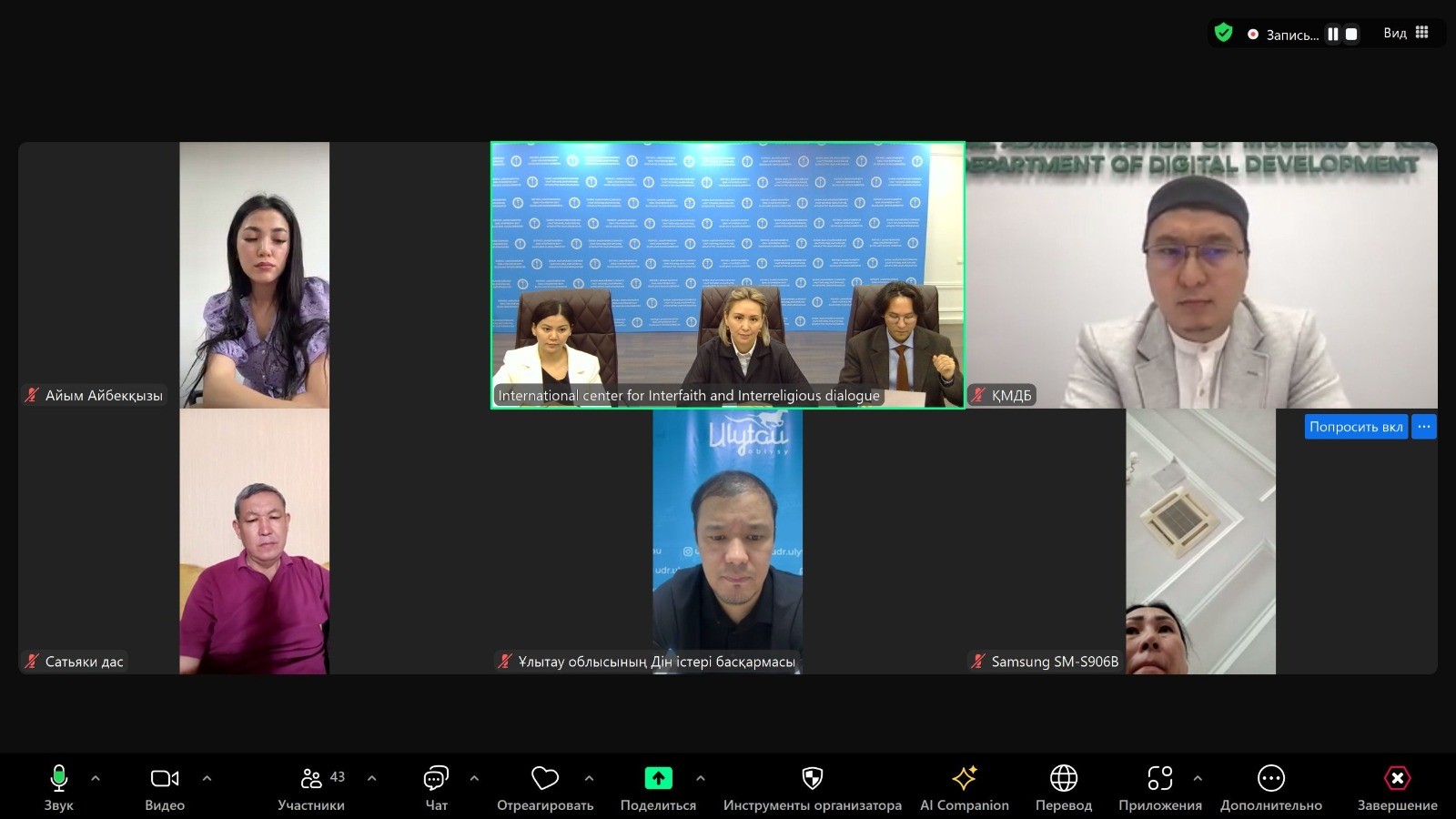
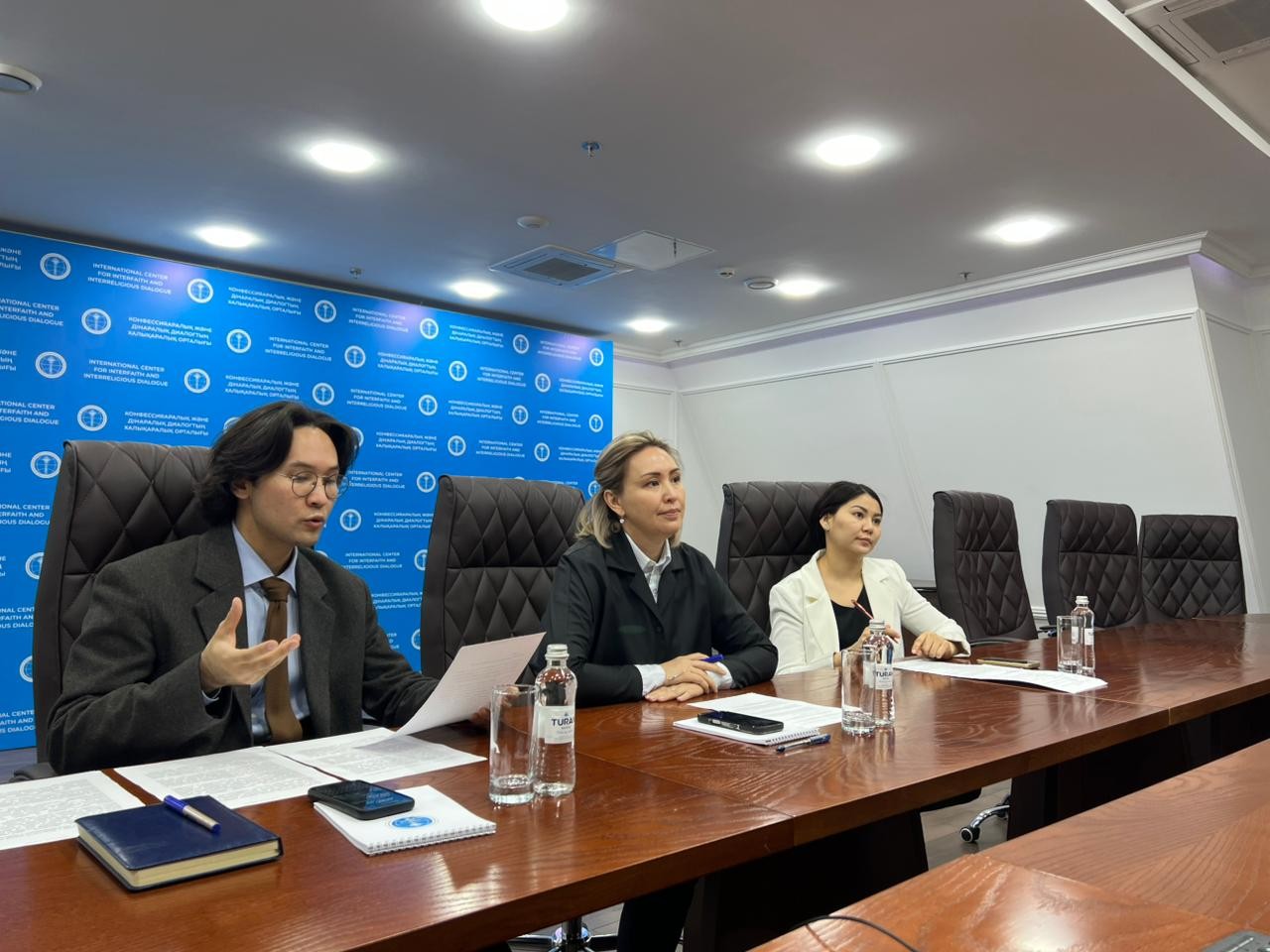
The International Center for Interfaith and Interreligious Dialogue held an educational online seminar titled “Digital Religion: Neural Networks, Virtual Imams, and AI Sermons.”
More than 50 representatives of the media and expert community participated in the seminar, including journalists, bloggers, SMM specialists, religious studies scholars, and digital communication experts. Participants also included representatives of media and online platforms such as Kazislam, Tilshi.net, Baq.kz, Beine.Pro, and other information resources.
In her welcoming remarks, Ainur Anessova, Director of the Center’s Information Department, noted that digital transformation has significantly changed the ways religious information is obtained and disseminated. According to her, digital literacy, professional responsibility, and adherence to ethical standards have become especially important under these conditions.
Zhanserik Temirtashev, Director of the Center’s Department of External Relations, spoke about global trends in the use of artificial intelligence by religious organizations. He emphasized that, as part of the implementation of the Astana Declaration of Peace 2025, adopted following the VIII Congress of Leaders of World and Traditional Religions, the Center is developing a conceptual document entitled «Ethical Code for the Use of Artificial Intelligence.» This initiative aims to establish a religious consensus on the application of new technologies and to protect human dignity in the context of digital transformation.
Timur Orynkhanov, Head of the Digital Development Department of the Spiritual Administration of Muslims of Kazakhstan (SAMK), addressed the risks of digital disinformation. He paid particular attention to social media algorithms that can create so-called «information bubbles.» He noted that fake religious rulings, as well as videos containing distorted or out-of-context content, are regularly circulated online. As one of the tools to counter disinformation, he presented the «Imam AI» project. According to Timur Orynkhanov, the system operates exclusively on the basis of SAMK’s verified database and does not use information from unverified open sources.
Nazerke Orgara, Chief Expert of the Center’s Information Department, dedicated her presentation to the responsibility of journalists when using artificial intelligence. The speaker warned about the danger of so-called AI «hallucinations», when neural networks may confidently generate non-existent quotations, sources, or religious information. In her view, any data obtained through AI requires mandatory verification. She also highlighted the issue of algorithmic bias. International studies show that some generative models may reproduce stereotypes existing on the internet, including those related to religion. Journalists, therefore, should critically assess AI-generated content and avoid disseminating biased formulations.
Summing up the meeting, participants emphasized the need to develop digital and media literacy, improve information verification mechanisms, and establish common ethical approaches to the use of artificial intelligence in the religious sphere.
Experts agreed that technology should remain a supporting tool, while responsibility for the content, accuracy, and consequences of publications must always remain with humans.