Where Is the Line Between Freedom of Preaching and Radicalism?
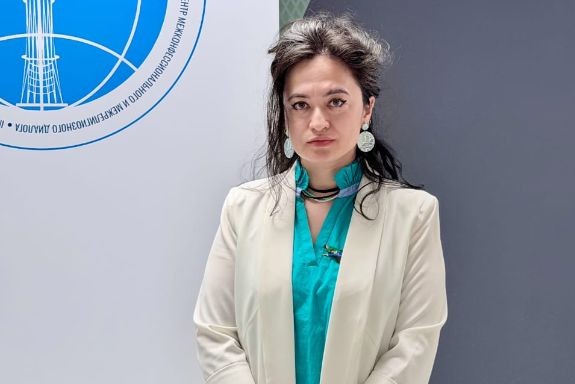
In recent months, the state has become increasingly assertive in its defense of secular principles, including by strengthening them in the text of the new Constitution. Simultaneously, members of the Majilis began to speak about the need to tighten penalties, including criminal penalties, for destructive religious propaganda. What could be the reason for this? Is the country truly moving toward a more stringent policy in this area? And why now? Religious scholar and Deputy Chairperson of the International Center for Interfaith and Interreligious Dialogue, Tatyana Lipina, agreed to discuss this and much more.
As a reminder, the recent string of scandalous statements by religious speakers prompted parliamentary deputies to become more active in issues related to freedom of conscience. One declared the permissibility of a "gift" in the form of one's own wife. Another said that adherents of Islam should not celebrate Nauryz. A third called for the non-burial of "Tengrists" in Muslim cemeteries. And a fourth even equated atheists with animals. Some even called playing the dombra "haram" earlier. All of them, after the social media outcry, faced legal consequences for their statements in one way or another. But was this a lesson for other preachers—you can't shut everyone's mouths, after all? Of course, the fight against radicals is necessary, but where is the line at which it risks degenerating into a "witch hunt"?
Tatyana, don't you think this "prohibition" reflects a broader shift in the state's attitude toward religion? After all, state policy in this area used to be more flexible – "traditional" Islam was actually encouraged, and there even existed a dedicated ministry...
Your question requires some important clarification. First of all, regarding the state's attitude toward religion. It remains unchanged: Kazakhstan has declared secularism and continues to declare its commitment to this policy. But some might interpret its defense as "prohibition" – which is fundamentally wrong. Let me also remind you that individual initiatives by parliamentarians do not constitute the official position of the state.
Being one of the fundamental principles of the Kazakh state, secularism does not mean irreligion. It merely presupposes equidistance between government institutions and the educational system and any religious or non-religious beliefs. Faith, convictions, and worldview, however, are a private, personal matter. Every adult citizen has the right to adhere to any religious beliefs and observe religious regulations within the law, or to remain devoid of any religion at all.
Essentially, secularism serves as a guarantee of balance between different worldviews. To prevent any religion or atheism from becoming the state religion, dictating universal standards and rules for all citizens, or interfering in the formation of the beliefs of the younger generation.
As for the concept of "traditional Islam," it lacks an academic basis. It is more accurate to speak of the historical role of religion. Specifically, "Kazakhstani Islam" was formed taking into account the cultural and historical characteristics of Kazakhstan. Today, it exists within the realities of an independent state governed by the rule of law, with its own model of state-confessional relations.
- So, today, challenges arise not only for secularism, but also for national identity?
- Yes, as we see from the examples you cited above. Here, it is important to clarify the historical background. The Soviet period, to some extent, contributed to the "reformatting" of the historical memory and cultural code of some peoples, including the Kazakhs. As a result of a series of events (war, famine, migration), which led to a significant reduction in their numbers, this ideological construction created the threat of the disappearance of language and traditions. And it is quite natural that the nation strives to restore its identity – linguistic, cultural, and historical.
However, in certain aspects, this process can be accompanied by various manifestations of extremism, especially in the absence of objective historical data. It is precisely these kinds of manifestations that the state opposes, especially considering that the vector for building the Kazakh nation has already been outlined.
That is, if individual groups with a weak civic identity exist in the country, then for one reason or another they find themselves outside the Kazakhstani context or consciously distance themselves from it. And when this is due to an "Islamic" identity, such a position usually stems from a misunderstanding of the specifics of this world religion.
- And what are the specifics of so-called "Kazakhstani Islam"?
- "Kazakhstani Islam" is Islam in the Kazakhstani context. In the history of any world religion, be it Buddhism, Christianity, or Islam, the local context is of significant importance. That is, each of them inevitably absorbed, imbued with new meanings, and modified many of the doctrinal practices of the local population. For example, Buddhism, upon arriving in Tibet, transformed the Bon religion and itself changed, organically absorbing it. And this is a completely normal practice. After all, completely destroying the worldview of people who have believed in something for centuries will not facilitate the adoption of a new tradition. Often, forced conversion to a religion significantly prolongs the process of its establishment.
Islam has undergone a similar adaptation in every country with Muslim populations, including Jordan, Pakistan, Saudi Arabia, and others.
- How exactly does the synthesis of Islam and traditional Kazakh culture manifest itself?
- As I already mentioned, "Kazakhstani Islam" has inherent features of Sufism. In the steppe, it was closely associated with ancestor veneration, the priority of internal spiritual development over formal rituals, the need to adhere to the family-genetic imperative of "Zheti ata," high-quality oral folklore, the profound musicality of the Kazakh people, and so on. And today, among those same young people, Islamic identity, as our study showed, is combined with a belief in the power and help of ancestral spirits (5.2%), as well as in a mystical path leading to Allah through a mentor (3.2%).
It's worth remembering that mastery of words, expressed musically, was particularly revered in Kazakh society. Musical instruments themselves, as well as kyuis, termes, epics, and other works, were not simply an art form but also reflected the people's existence and cultural code. The vast lyrics and melodies of songs were memorized and passed on throughout the steppe, conveying not only the rhetoric of love for the Motherland and humanity but also serving as a kind of "seal" of collective memory. It's enough to recall the "Elim-ai" as a reminder of the greatest tragedy of the Aqtaban shubyryndy, the Alqaköl sülama. Music also served as an important message, as evidenced by the inspiring kyui "Adai" or the kyui "Aqsaq kyulan," through which the khan was informed of the death of his son.
As for the "Zheti ata," this is a progressive principle of preserving genetic diversity and protecting against inbreeding, the vital necessity of which was scientifically proven much later.
To some extent, I would also attribute to tradition the unique diplomatic forms of co-existence of Kazakhs with other peoples, their desire to live in harmony with a different cultural “I”.
To summarize our conversation, what are the main conclusions that follow from all of these processes?
Conclusion one: Islam is always situated within a local cultural context. If observed practices don't correspond to this context, then they originate from other regional Islamic traditions.
Second: the state isn't fighting against "Kazakhstani Islam," but rather opposes manifestations of religiously motivated extremes in the form of the denial of cultural heritage and national identity. This includes the widely celebrated Nauryz festival in Central Asia, laws that enshrine monogamy, or, say, music, and so on. And it has every right to do so, just like any other state.
Third: the denial of secularism is a denial of state legislative principles; the denial of a country's culture is a denial of the state's national identity. Such manifestations are radical and destructive both for the individual and for society as a whole.