Tokyo, June 30, 2026
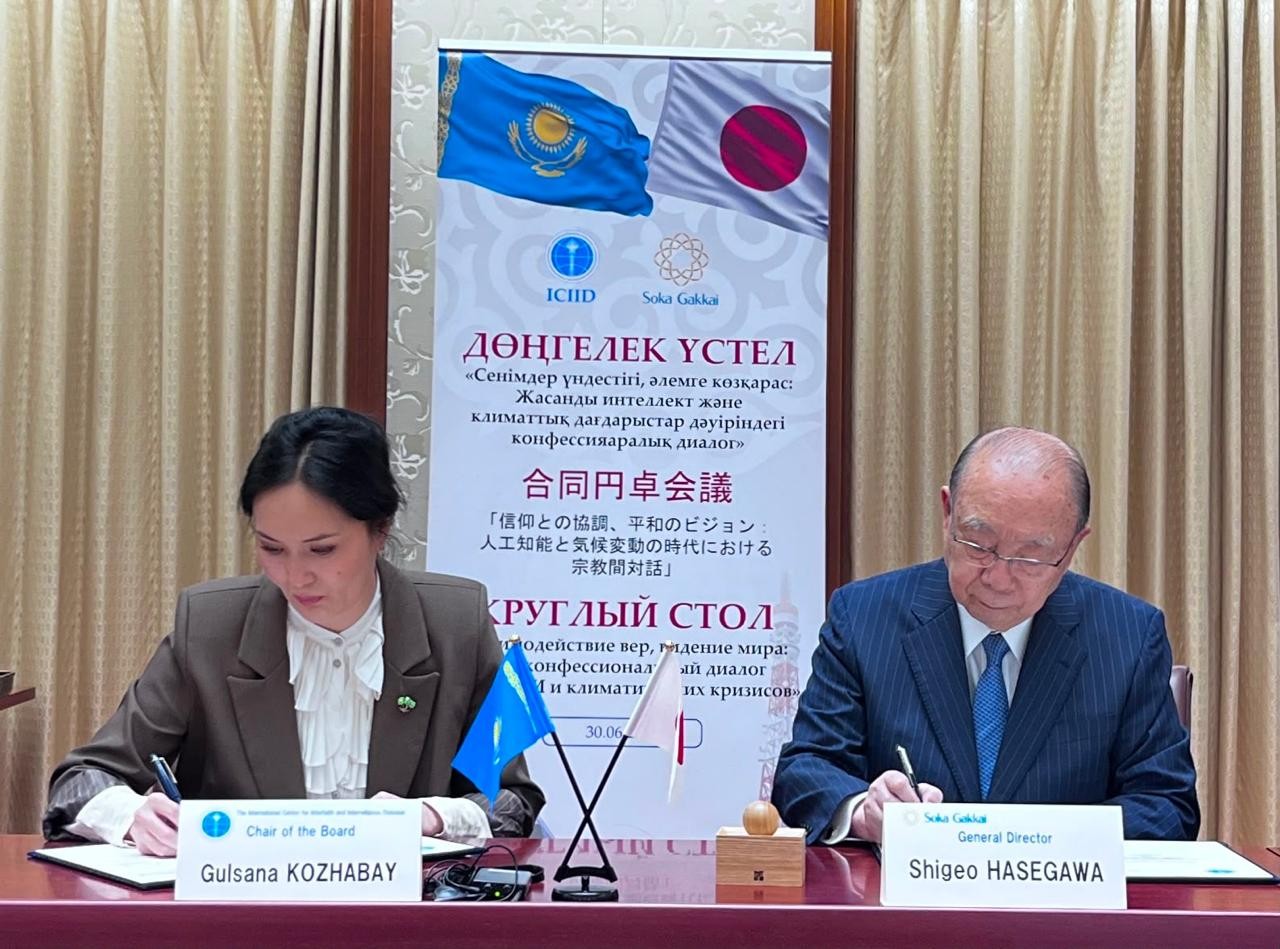
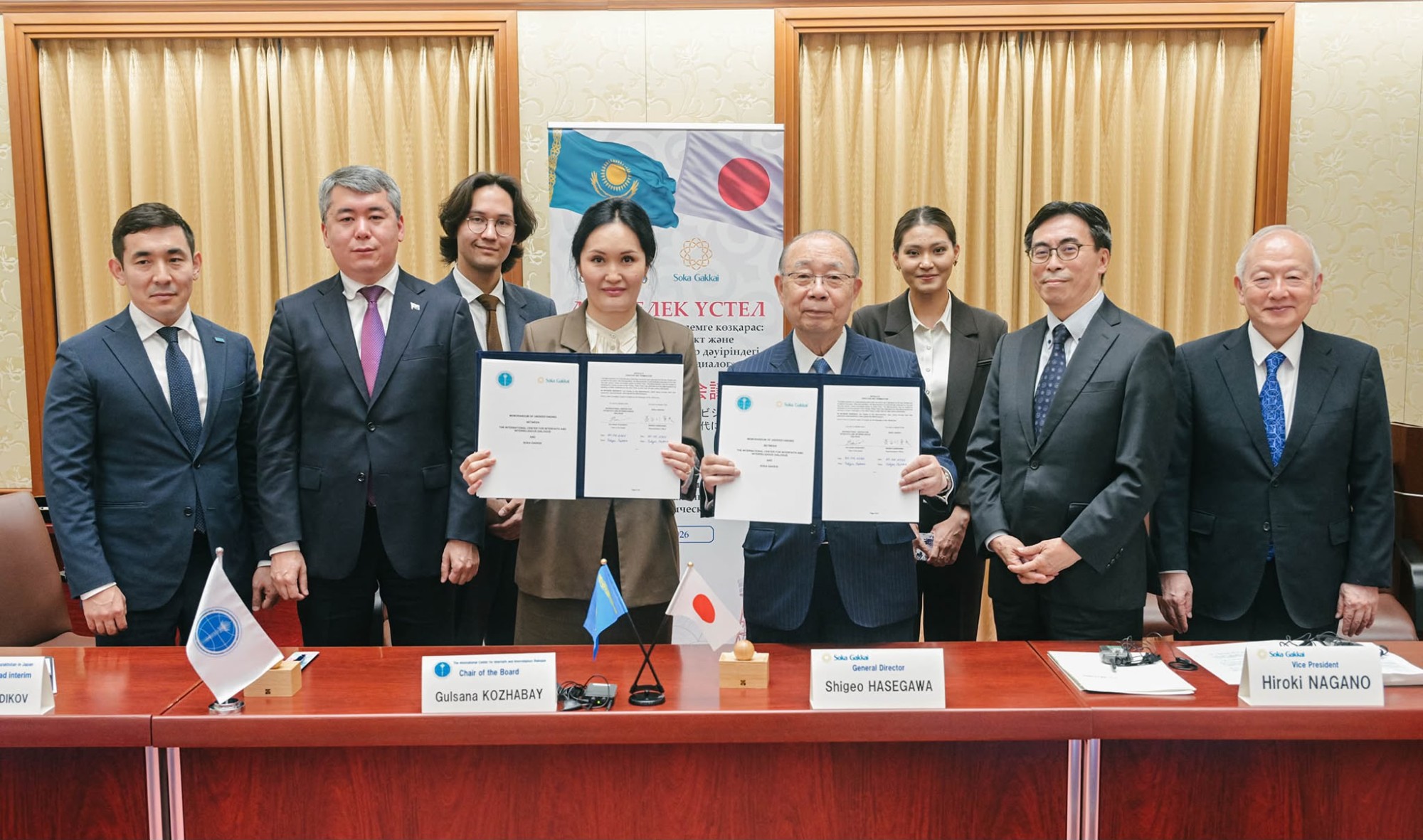
On June 30, 2026, in Tokyo, the International Centre for Interfaith and Interreligious Dialogue and the International Buddhist organization Soka Gakkai signed a Memorandum of Understanding aimed at developing long-term cooperation in the fields of interfaith dialogue, spiritual diplomacy, academic and expert exchange, as well as joint educational and humanitarian initiatives.
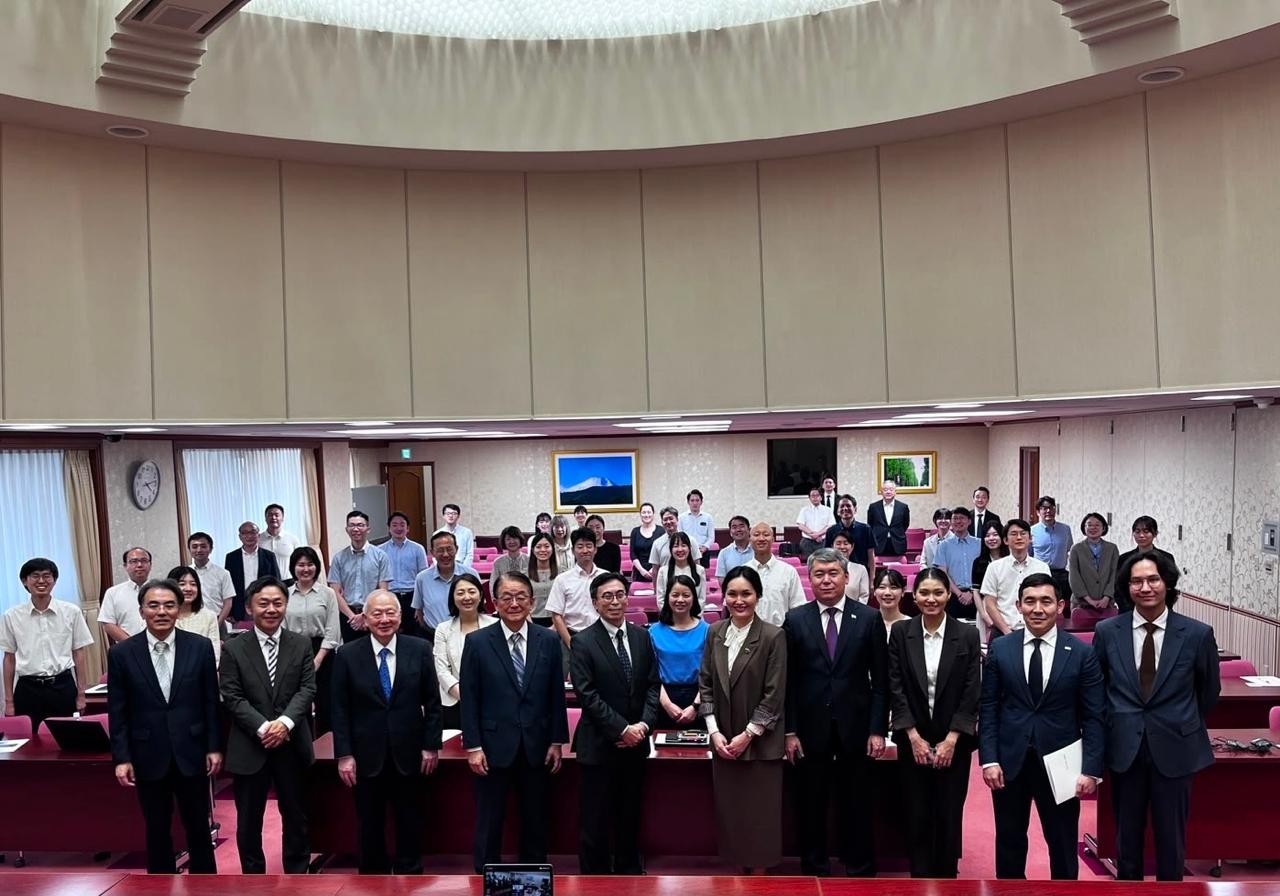
The signing took place during a joint roundtable on the theme “Interaction of Faiths, Vision of Peace: Interfaith Dialogue in the Era of Artificial Intelligence and Climate Change,” supported by the Embassy of the Republic of Kazakhstan in Japan.
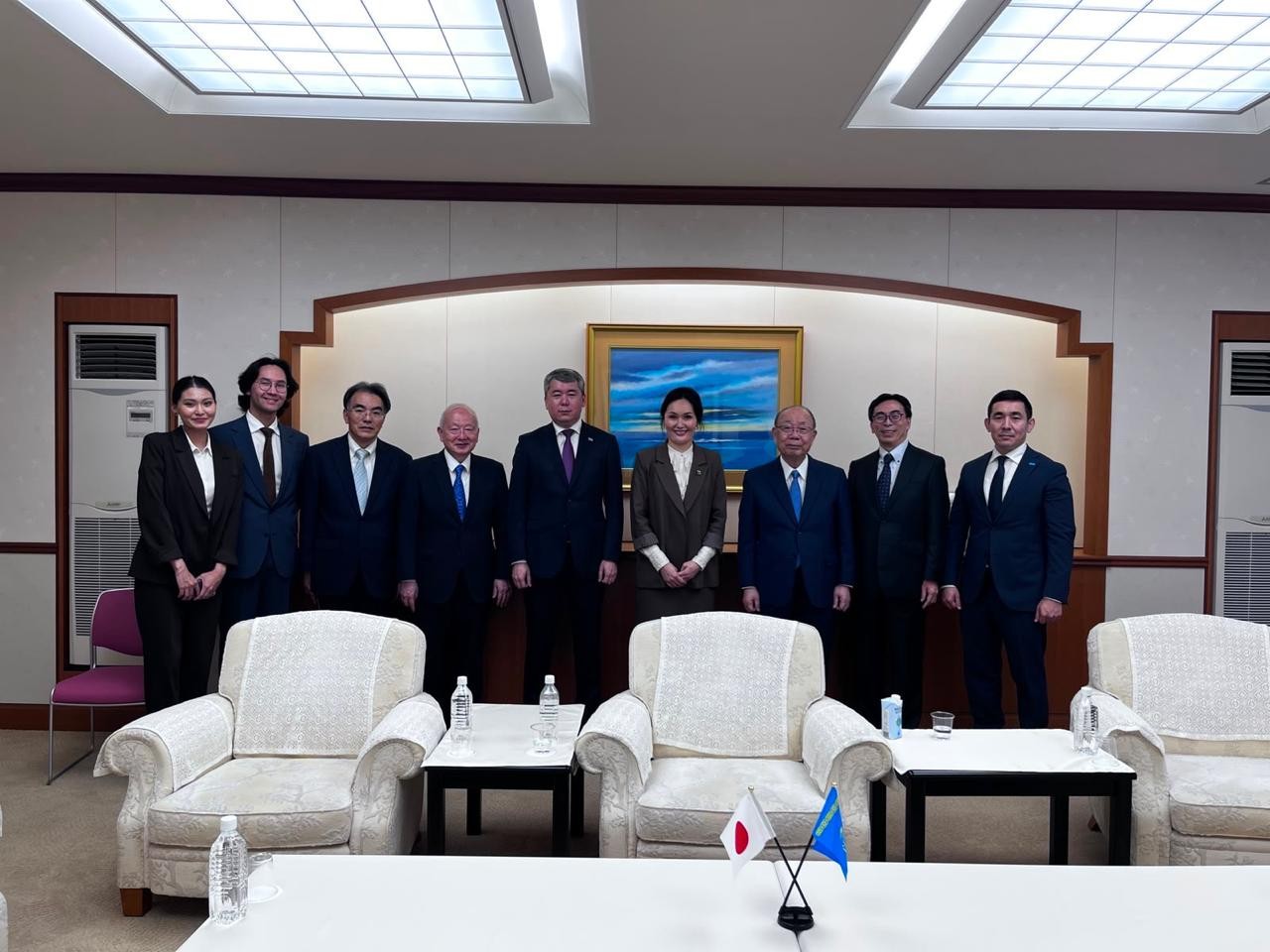
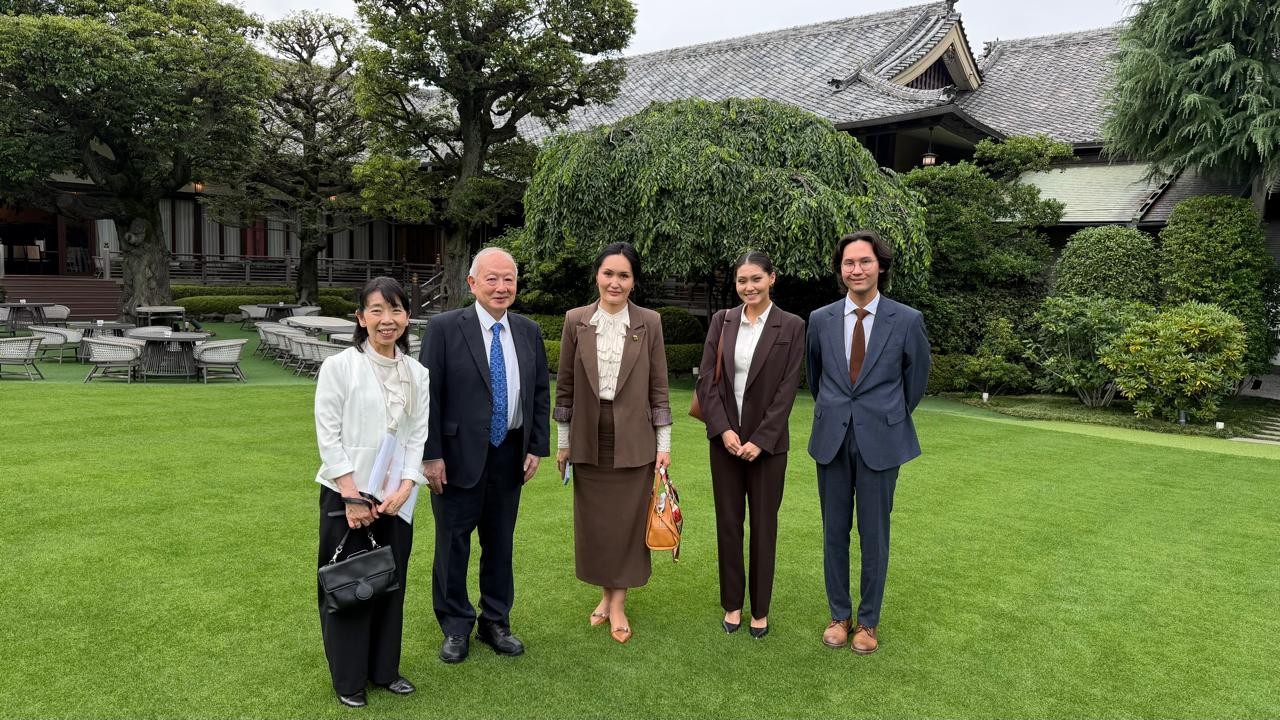
The event was attended by Gulsana Kozhabay, Chair of the Board of the International Centre; Shigeo Hasegawa, President of Soka Gakkai; Bakhytzhan Suyundikov, Chargé d’Affaires of the Embassy of the Republic of Kazakhstan in Japan; heads of departments of Soka Gakkai and the International Centre; as well as representatives of the academic communities of Kazakhstan and Japan.
Soka Gakkai, one of the world’s largest modern Buddhist movements, has for decades promoted the values of peace, human dignity, education, and intercultural and interreligious dialogue. The meeting further strengthened the organization's long-standing cooperation with Kazakhstan within the framework of the Congress of Leaders of World and Traditional Religions.
In her opening remarks, Gulsana Kozhabay noted that the meeting with Soka Gakkai represents an important continuation of long-term partnership within the Congress of Leaders of World and Traditional Religions. She emphasized that Kazakhstan and Japan are connected not only by modern bilateral relations, but also by a shared Eurasian spiritual history dating back to the Silk Road and the spread of Buddhist culture. Special attention was given to Kazakhstan’s role in promoting interreligious dialogue through the Congress, the development of its youth and expert dimensions, as well as issues of climate change and the ethical interpretation of artificial intelligence. Gulsana Kozhabay also highlighted that the shared historical memory of Hiroshima, Nagasaki, and the Semipalatinsk nuclear test site places a special moral responsibility on both Kazakhstan and Japan to promote a culture of peace, and that remembrance of past tragedies should form the basis of an “ethics of prevention” in addressing issues of peace, security, ecology, technology, education, and the upbringing of future generations. These issues were discussed within the framework of the foreign policy course of the President of the Republic of Kazakhstan, Kassym-Jomart Tokayev, aimed at promoting the dialogue of civilizations, a culture of peace, and the principle of «unity in diversity».
In his turn, Shigeo Hasegawa, President of Soka Gakkai, emphasized the role of dialogue as a tool for overcoming differences between cultures and peoples, noting the high significance of cooperation with Kazakhstan and the International Centre in advancing global interreligious engagement. He stressed that the philosophical foundations of Buddhism, including the ideas of interconnectedness, compassion, and respect for human life, underpin the organization’s commitment to building a culture of peace. Soka Gakkai leadership expressed confidence that the signing of the Memorandum of Understanding and the roundtable would open new opportunities for joint work in promoting interfaith dialogue, mutual understanding, and a culture of peace.
During the roundtable, the International Centre presented two concept documents developed following the outcomes of the VIII Congress of Leaders of World and Traditional Religions: “Ethical Code for the Use of Artificial Intelligence in the Religious Sphere” and “The Role of Religions in Combating Climate Change.” Participants discussed the role of religious and public institutions in shaping responsible approaches to new technologies, environmental sustainability, and the strengthening of a culture of peace.
On the Japanese side, Nobuyuki Asai, Director of the Department for Environmental and Humanitarian Affairs of the Soka Gakkai Peace Center, presented the organization’s approach to sustainable development based on educational activities, interfaith cooperation, and practical environmental initiatives such as the “Green Charter” and “Green Faith Japan.” He emphasized that in the Buddhist tradition, care for nature begins with inner human development, and responsible stewardship of the environment is an integral part of spiritual life.
Expanding on contemporary challenges, Yoshiyuki Nagaoka, Director of External Relations, highlighted the growing relevance of ethical issues related to artificial intelligence and stressed the importance of preserving human dignity, spiritual values, and a responsible approach to the use of new technologies.
Representatives of Kazakhstan’s academic community presented an analysis of historical and cultural links between Central and East Asia. Professor Nikolay Tsyrempilov of Nazarbayev University spoke about the role of the Silk Road in the spread of Buddhism in ancient Kazakhstan, highlighting the Ablai Kit monastery with its unique Buddhist manuscripts in Tibetan and Oirat languages as a vivid testament to the country’s historical religious diversity.
Sabina Insebayeva, Assistant Professor at Nazarbayev University, emphasized the resonance between Japanese philosophy of harmony and the Kazakh concept of “Tolyk Adam” by Abai Kunanbayev, noting that both traditions converge on the idea of cultivating a holistic personality where reason, spirituality, and compassion form the foundation of a harmonious society.
Maral Andassova, Acting Associate Professor at the Department of the Far East, Al-Farabi Kazakh National University, highlighted deep philosophical and historical parallels: in Japanese mythology and ancient Turkic Tengrism, there are similar notions of a supreme deity and the sacred origin of rulership, while the works of philosopher Toshihiko Izutsu reveal common features between Sufism and Zen Buddhism. She emphasized that both religious traditions view the path to harmony as lying in inner human transformation.
Following the meeting, representatives of the International Centre and Soka Gakkai agreed to continue regular expert exchanges, expand cooperation between religious and academic institutions, and develop joint initiatives in the field of interfaith dialogue and the promotion of a culture of peace.
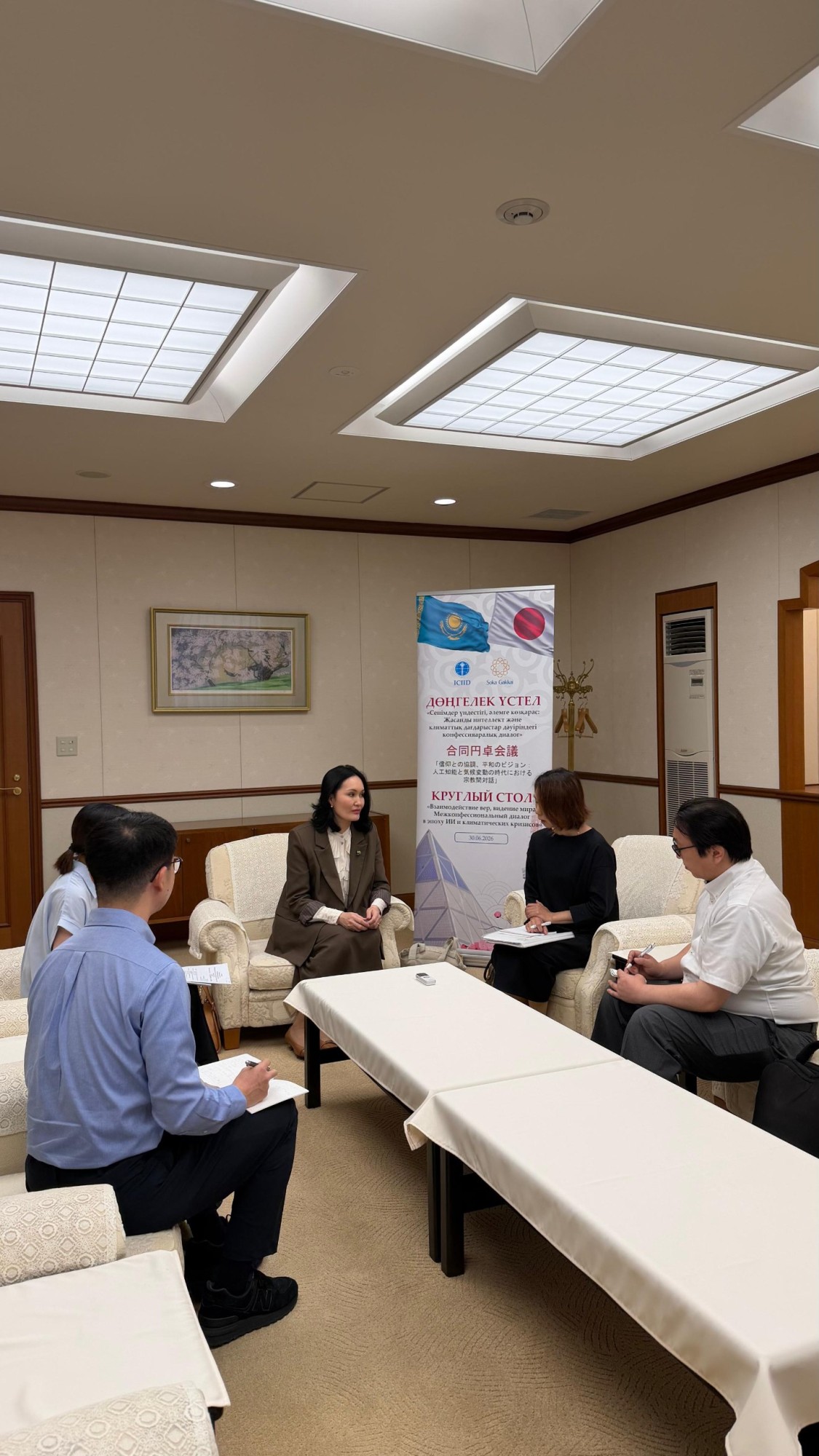
The event concluded with interviews with the Centre’s leadership conducted by local media representatives.