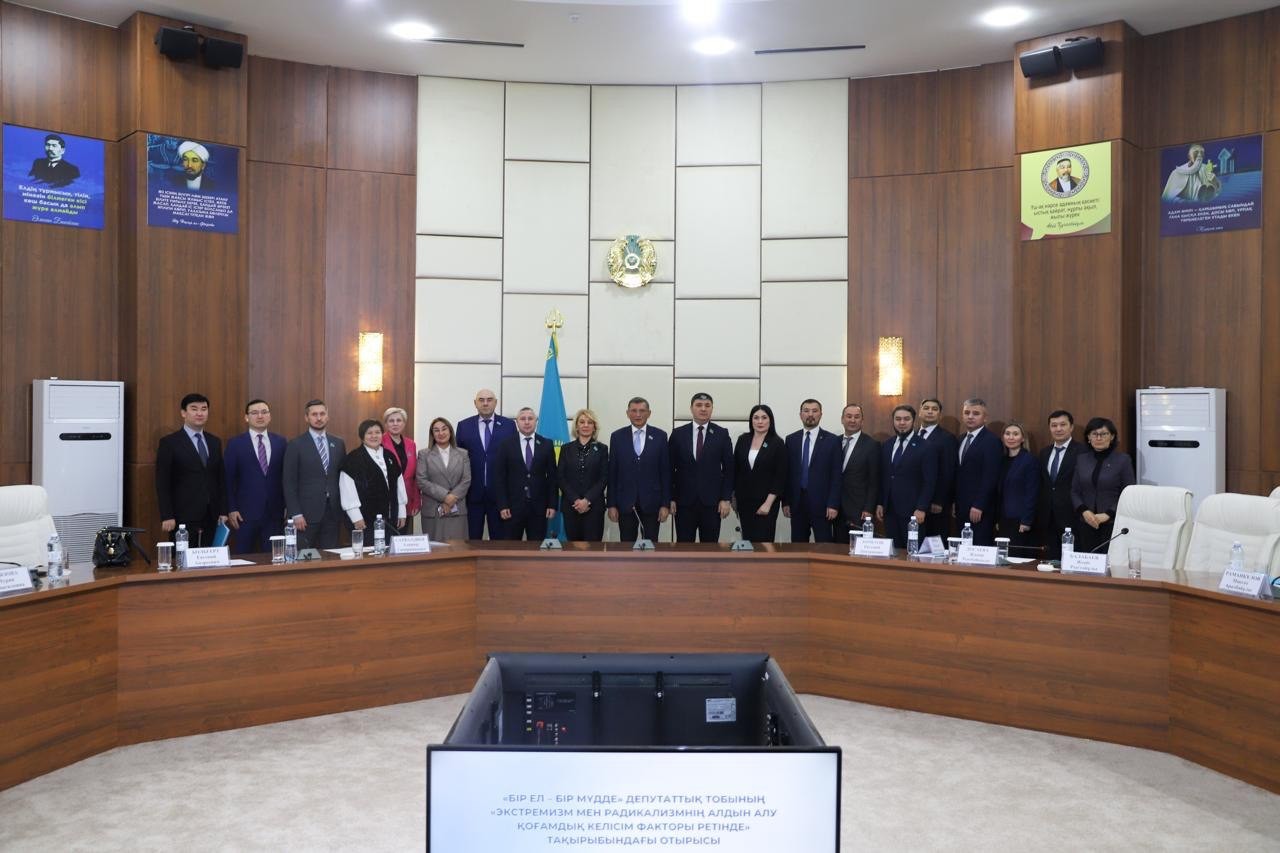
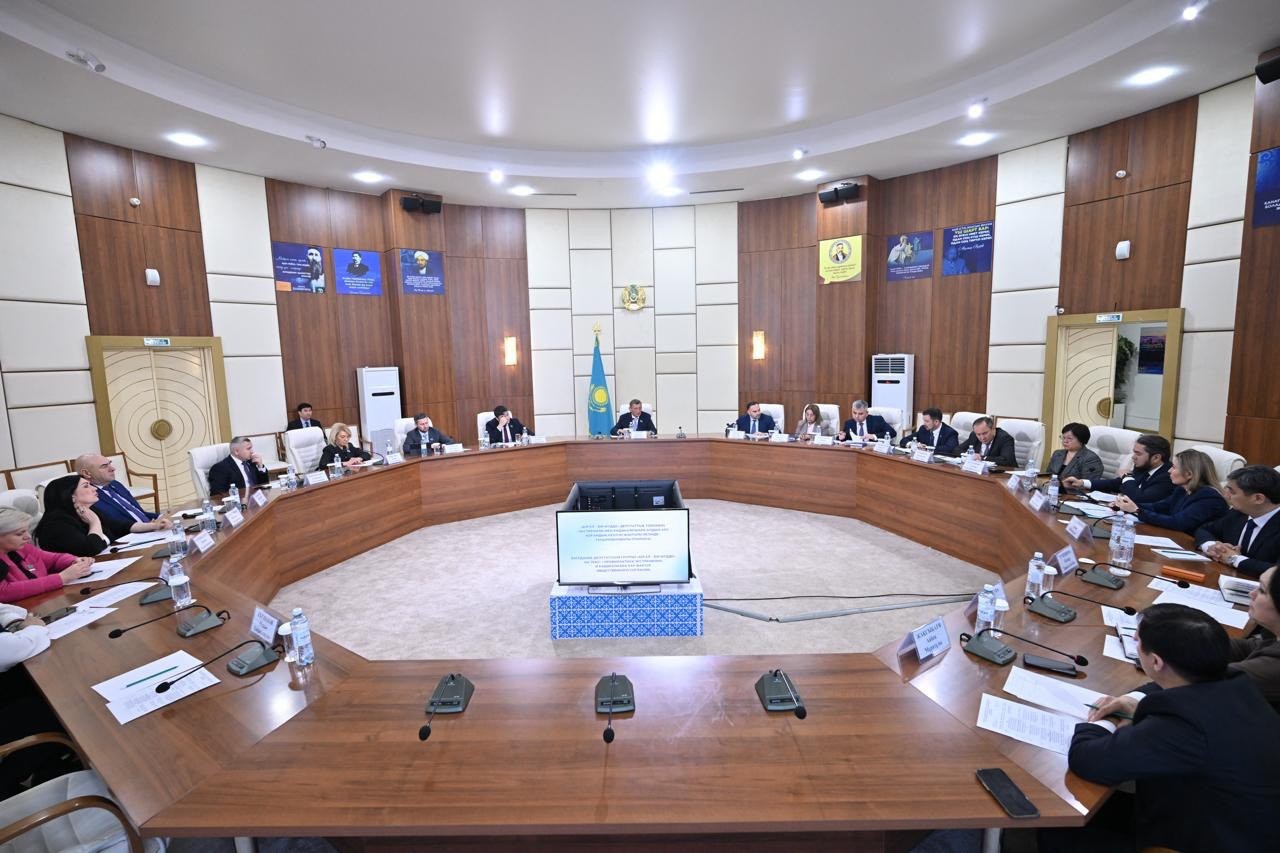
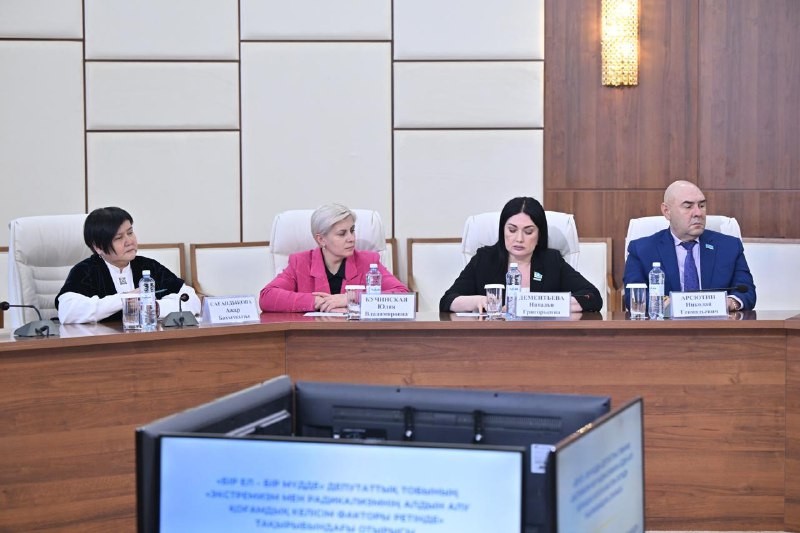
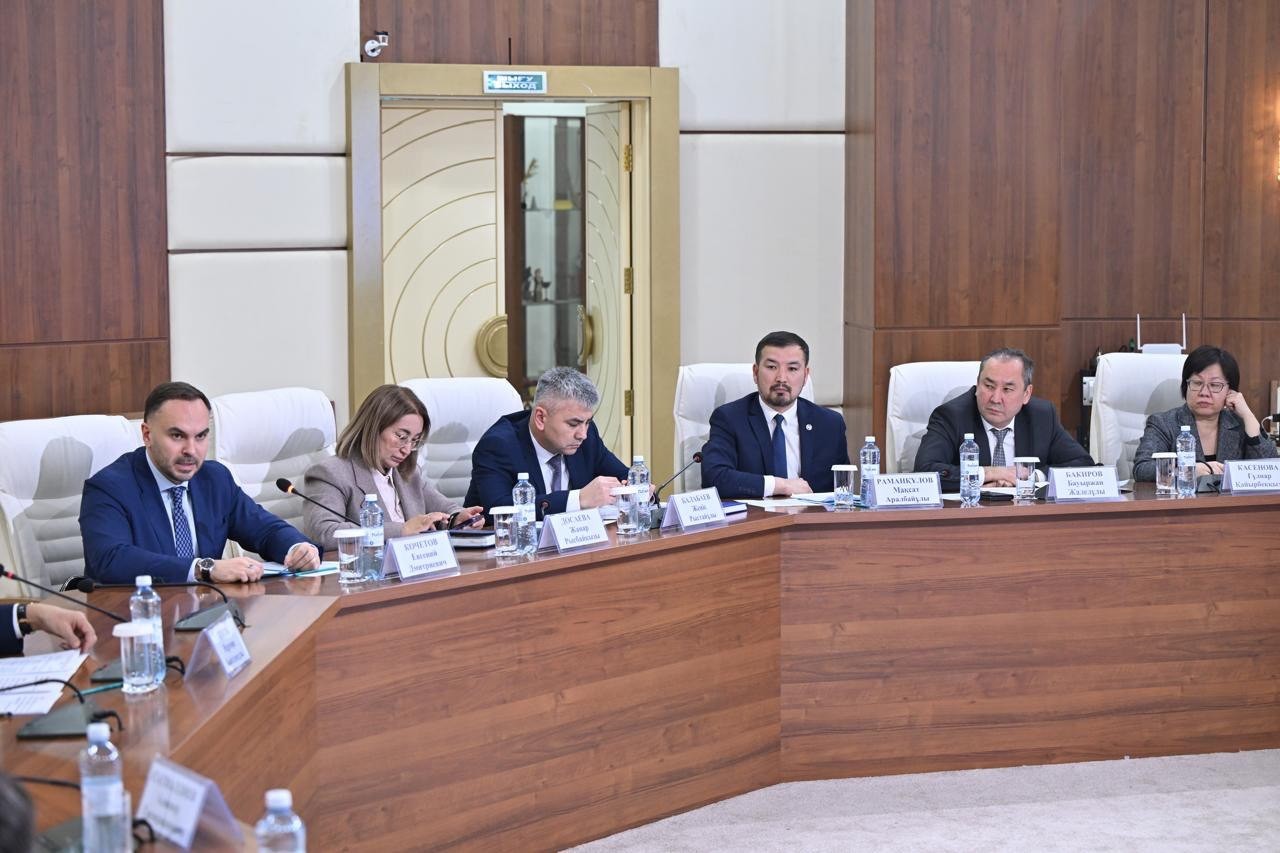
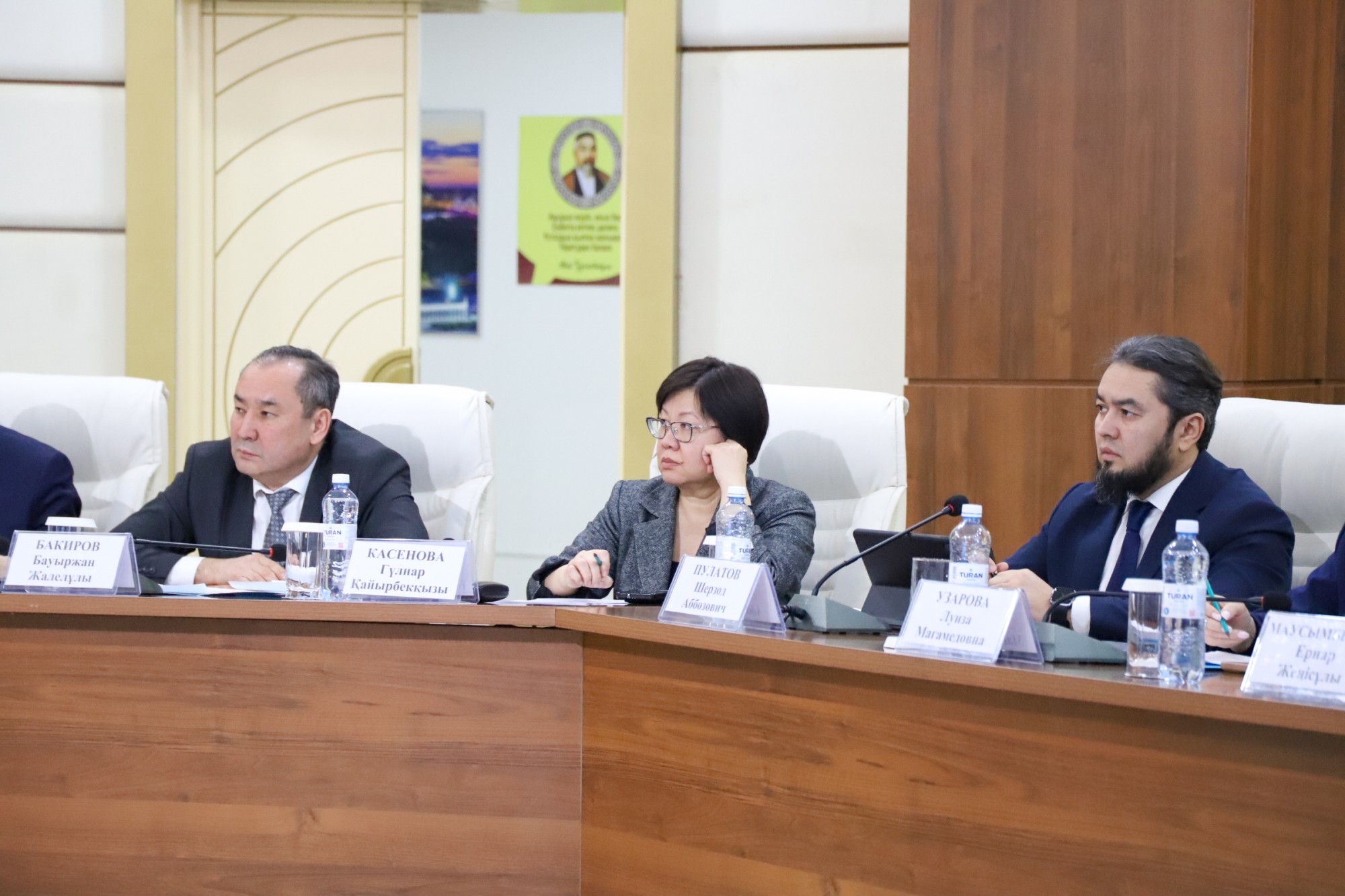
On January 28, 2026, a meeting of the Mazhilis Parliamentary group «One nation – common good» was held, dedicated to issues of preventing extremism and radicalism as fundamental factors of social cohesion. Participants analyzed key challenges to stability in the context of global transformations and extensive digitalization. Special attention was given to protecting the information space and developing mechanisms to counteract destructive influences amid increasing information flows.
The head of the parliamentary group, Nurtore Zhussip, noted that in today’s conditions of global change, digitalization, and intensified migration and information processes, issues of social stability and national security are of particular relevance. According to him, extremism and radicalism remain serious challenges, negatively impacting public consciousness and posing threats to interethnic and interfaith harmony, and their prevention is a key condition for maintaining social unity and sustainable development.
During the event, it was emphasized that the prevention of extremism and radicalism should be systematic and preventive in nature, aimed at addressing the root causes of radicalization, strengthening public trust, promoting a culture of dialogue, and fostering a shared civic identity as a basis for sustainable development and interfaith harmony.
On behalf of the International center for Interfaith and Interreligious dialogue, the meeting was attended by Deputy Chair Bauyrzhan Bakirov. In his speech, he stressed that against the backdrop of the dominance of geopolitical agendas in the information space, a false impression arises that extremism and radicalism are no longer relevant issues, whereas these threats continue to exert negative influence, including through digital media and youth involvement. Bakirov noted that currently, topics such as globalization, geopolitical conflicts, interstate tensions, and open confrontations are the most popular in Kazakhstan’s information space. In such conditions, the existence of nuclear weapons among certain conflict participants and the threat of their use is of particular concern. However, just 5–7 years ago, the spread of violent extremism and terrorism ideology was a highly relevant problem for Kazakhstan and the international community. Today, it may seem that these issues have receded, yet radical ideology continues to spread, particularly among youth, while global conflicts directly impact the religious situation in the country.
Based on monitoring of the internet space, Mr. Bakirov identified major trends and risks in the religious sphere, including increased religiosity among citizens and growth in the number of practicing believers. New adherents often become targets for destructive and radical preachers. There is a rise in false and radical ideological content aimed at distorting national and cultural identity, as well as the activity of pseudo-experts and polarization through manipulative rhetoric. Interest in alternative forms of faith is also observed, reflecting spiritual and cultural searching that requires scientific, historical, and cultural-philosophical interpretation. High risks are posed by the influence of contradictory and negative online content on the younger generation, making spiritual education of youth a strategic priority. Additionally, the widespread use of artificial intelligence presents opportunities to enhance informational and educational work, religious literacy, and monitoring if applied correctly, but misapplication could lead to information distortion and undermine national interests.
Mr. Bakirov emphasized that spiritual immunity is becoming a new form of national security. In the context of rapidly developing information technologies, the key question is how society can resist external influences aimed at discrediting Kazakhstan’s national values and interests. A secular model of state-religion relations, based on equality of all citizens before the law and respect for personal beliefs, remains the main guarantee of stability and national unity.
As a result of the discussion, participants developed practical recommendations aimed at improving preventive work, reducing social tension, and strengthening public cohesion. Experts noted that their implementation will contribute to societal resilience and the preservation of the secular model of state-religion relations as a key factor of national unity. The International Center for Interfaith and Interreligious Dialogue will continue to monitor, conduct scientific analysis, and assess risks and threats in the religious sphere.